Social proof is when people check what others are doing before they make their own choices. For your ecommerce store, it’s how you get new customers to trust you and actually buy something.
Let’s say there are two skincare brands that launched around the same time. Brand A spent time getting customer reviews and connecting with beauty bloggers. In just six months, it collected 2500+ reviews with a 4.8-star rating average. And it got consistent social media shoutouts from its partners.
Brand B went the other, more expensive route. It used their marketing budget for Facebook ads, but didn’t pay attention to collecting reviews.
The ending? Brand B spent wayyy more than Brand A, but gained only a few customers and little to no recognition.
If you want to avoid being in the same boat as Brand B, this article is for you. We’ll talk about social proof, its benefits, and the six best types you can use. Plus, we’ll share a tool that can help you easily collect and manage authentic testimonials.
What Is Social Proof?
Social proof is a mental phenomenon where we depend on other people’s decisions and copy what they do because that’s what we think is right. It’s common in ecommerce because we love shortcuts and we trust what others have already tested and approved.
There are so many social proof examples in online retail that you can take advantage of. Customer reviews and star ratings are the most obvious ones.
Then you have user-generated content, influencer endorsements, and “bestseller” labels.
You can also add customer testimonials to your site, mention media coverage you’ve gotten, or show live counters like “23 people viewed this in the last hour” (which honestly makes people panic-buy at times).
The Importance of Social Proof
Social proof can help you increase conversion rates, build solid credibility, and increase brand awareness if you learn how to use it properly. Let’s discuss each:
Boost Conversion Rates
Last year, I ordered a shoulder bag from a new brand I’d been following for months. I saw its product on my feed once, and then I became interested because of its sleek design.
But do you know what made me buy? It’s when I visited its website and saw a 4.5-star rating with hundreds of positive reviews. All of them came from verified buyers. Without those reviews, I might not be convinced to buy anything… even if I like how its products look.
That’s how most of your customers think, too. Research shows that when online shoppers read and interact with product reviews, conversion rates increase by 144%.
UGCs also have the same effect on them. Businesses that show customer photos and videos on their product pages (like what that fashion brand did), saw their sales go up by 161%.
Pro-Tips for New Businesses:
- Start collecting reviews from day one,… even if you only have a few sales.
- Ask your customers to share photos with their orders (offer a small discount if needed).
- Use review widgets that show star ratings right on your product pages.
Build Credibility
Getting people to trust your brand is tough (unless you get lucky and become viral). It’s so easy to fake images and mention features and benefits that aren’t even true. That’s why many online shoppers are being extra careful.
Social proof helps you show potential customers that real people have actually bought your stuff… and had good experiences with it.
BrightLocal’s latest survey found that 42% of people trust online reviews just as much as recommendations from their friends and family. Another 29% put customer reviews on the same level as advice from influencers they follow.
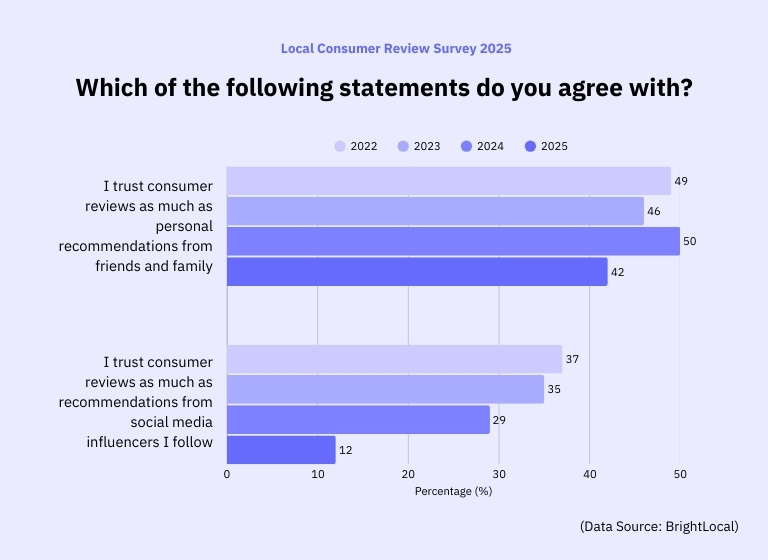
It’s pretty impressive if we think about how much weight it has to strangers’ opinions.
Besides reviews, here are five types of social proof that work well for building trust (and brands that use them):
- Customer Testimonials: Sephora customers use the tag #sephora to post detailed opinions about their fave products and share their experience through captions and videos.
- User-Generated Photos: Apple’s #ShotoniPhone campaign features real photos and videos captured by users.
- Influencer Posts: Daniel Wellington built their whole brand around watch photos from influencers and bloggers.
- Certifications: Patagonia created a whole landing page just to explain and show its “Fair Trade” certification.
- Media Coverage: Allbirds landed a feature story in the New York Times about 15 months after its launch.
Improve Brand Awareness
Social proof marketing can promote your brand faster and more effectively than search engine or display ads. When people your customers already follow start using your products (without “forcing” them to), their fans pay attention and want to try the same stuff.
Take Alo Yoga as an example. Years ago, celebrities like Kendall Jenner and Hailey Bieber started wearing their leggings and sports bras in public (gym, airport, and coffee runs). Now, Kendall is a “certified Alo ambassador,” and her post has earned a lot of engagement from her followers.

Of course, we can’t give all the credit to celebrity sightings for Alo’s growth, but it definitely helped. Their parent company now pulls in nearly $2 billion in revenue (wow!).
You can use the same concept and work with micro-influencers, focus on UGC campaigns, or create an “ambassador” program where loyal customers can sign up and get perks for posting.
Perfect! You now know the benefits of social proof. The next step is learning which types work best for ecommerce brands like yours.
6 Types of Social Proof in Marketing
Here are the most effective social proofs you can start using today:
1. Customer Reviews
The first one on our list is customer reviews. Research shows that when shoppers read reviews, ecommerce stores see their conversion rates go up by 190% (for budget items) and 380% (for expensive products). Wow.
Most of your satisfied buyers are willing to share their thoughts, but you need to time your request and give them a little push to sit down and… write. If you’re not doing this consistently, you’ll lose sales to your competitors who’re making the effort.
Pro-Tips for Getting Verified Reviews:
- Wait 7-30 days after delivery before asking (people need time to try the product).
- Offer something small in return, like 10% off their next order or loyalty points.
- Make it easy with direct links to your review platform.
- Send one follow-up if they don’t respond, then stop bothering them.
- Show verified purchase badges so people know the reviews are real.
Urban Outfitters is one of the top brands that uses reviews as a smart sales tool. It shows overall ratings and customer photos of real people wearing the items.
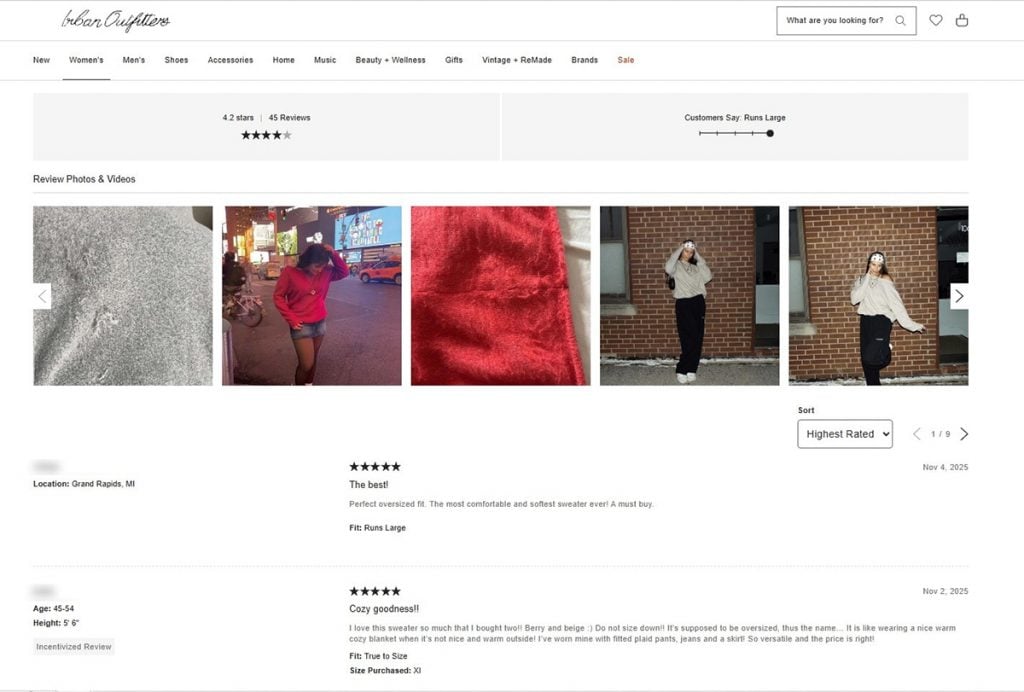
Plus, it includes more helpful details extracted from the comment section, like “Customers Say: Runs Large.” Most of the reviews show the buyer’s age, height, and fit comments, which help other shoppers in picking the right size (and help you reduce returns).
2. Video Testimonials
If you want a more powerful social proof than text reviews, video testimonials are your best option. Zebracat found that 71% of shoppers feel more confident about a product after watching a video testimonial, while only 38% get that from written reviews.
But why is that? Videos let you see facial cues and listen to the reviewer’s tone. You feel more connected to the person talking because you can see their expressions and reactions. Do they look mad or happy? Is their tone calm or… a bit aggressive? It’s also easier to know whether they are faking it.
Plus, you can take advantage of storytelling and creativity. Your customers can do and show more about your products. Those are some things that text reviews don’t offer.
How to Get Your Customers to Send Video Testimonials:
- Choose from satisfied customers: Reach out to your buyers who left 4 to 5-star reviews. They are more willing to share their experience than those who gave you a lower score.
- Provide a simple prompt: Get them started with a simple question like, “How do you use our product?” It gives them the freedom to think (or be creative) and not stick with a script.
- Aim for “natural” clips rather than polished ones: Smartphone videos shot in someone’s kitchen often work better than professional footage.
NaturallyCurly’s #HaveYouTriedThis campaign is the perfect example of a good video testimonial.
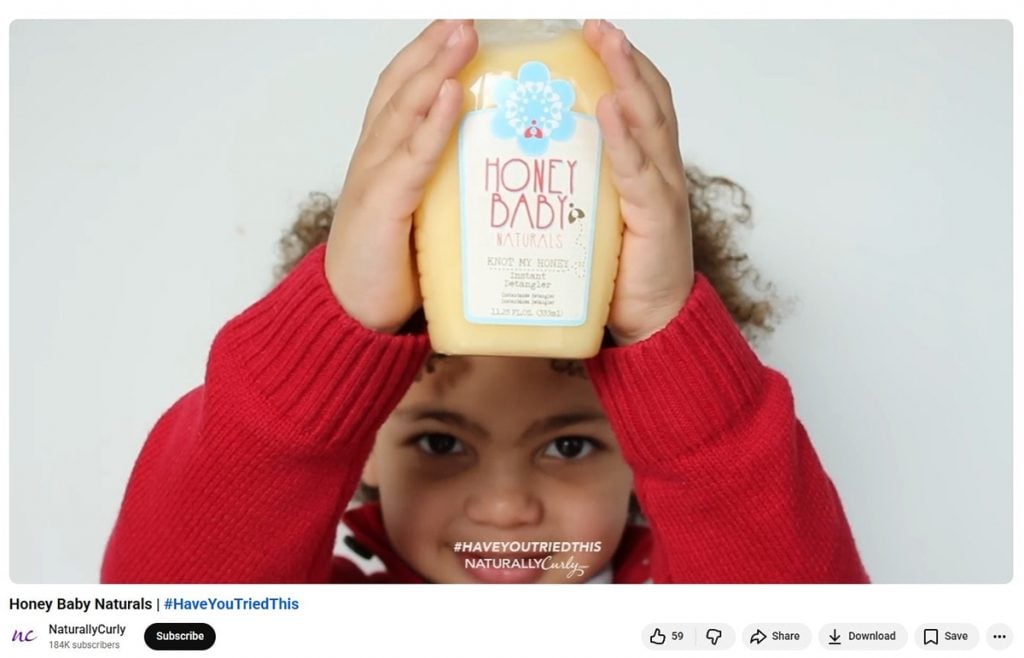
I love how genuine the video felt. The quality was good, but you know a professional didn’t shoot it. It also featured real families (a mom and a son) using the Honey Baby hair care product.
It’s just a 15-second clip, but the mom showed how she uses the product on her son and mentioned its benefits. It surely captured the attention of other viewers… just as it did for me.
3. Certifications and Awards
Our third type of social proof is a little more “formal” than the first two. Certifications (and awards) come from third-party organizations or industry experts that review a product’s safety, sourcing, or environmental standards.
These are the common certifications across product categories:
| Product Category | Common Certifications |
| Food & Beverages | USDA Organic, Non-GMO Project, Fair Trade |
| Beauty & Personal Care | Leaping Bunny, PETA Cruelty-Free, EWG Verified |
| Electronics | Energy Star, FCC Approved, CE Marking |
| Clothing & Textiles | GOTS Organic, Fair Trade Certified, Oeko-Tex |
| Home & Garden | Forest Stewardship Council, GREENGUARD Gold |
And here are two well-known brands that display their certifications to use as social proof… and reassure customers on the product’s quality.
- Aesop (beauty and personal care brand) lists its vegan formulas and third-party cruelty-free certifications.
- Ben & Jerry’s (food brand) shows its Fair Trade and Non-GMO certifications on its packaging and website.
4. Media Mentions
Imagine your brand being mentioned in Forbes magazine or The Guardian. What a great opportunity, right? Well, besides getting some recognition, it instantly makes you look more credible to potential customers.
Unlike paid ads, media coverage feels real because readers know the publication chose to write about you.
Look at what happened with Warby Parker when they first launched.

(Source: OptiMonk)
They got featured in Vogue and GQ, where writers called them “the Netflix of eyewear” and talked about their fair pricing. The response was incredible (in a very good way). Plus, it sold out their top 15 styles in four weeks and hit their entire first year’s sales goals in just three weeks.
Here are some popular publications that cover ecommerce brands:
- US: Forbes, TechCrunch, Business Insider, Entrepreneur, Inc. Magazine
- UK: The Guardian, BBC, Financial Times, Telegraph, Business Insider UK
Pro-Tips on Landing Media Mentions
- Pitch a story that connects your brand to a timely trend online shoppers care about.
- Target journalists who write about ecommerce topics.
- Work with digital PR agencies that have media relationships.
5. Influencer Endorsements
People trust recommendations from creators they already follow way more than random ads that pop up on their feed.
Recent data shows that 49% of consumers buy something at least once a month just because an influencer they follow posted about it. That’s nearly half your target audience making buying decisions based on social media posts.
The numbers make influencer marketing worth the investment, too. You’ll get around $5.2 back for every dollar you spend on these partnerships. Compare that to traditional digital marketing like Google Ads, where you might get $2 back, and you can see why more brands are working with real people instead of buying regular ads.
Dove’s 2022 body confidence campaign shows how powerful this works in real life. They partnered with micro-influencers on campaigns like #PassTheCrown and #DetoxYourFeed, which ended up getting over 1 billion views and 20% more engagement than their regular posts.
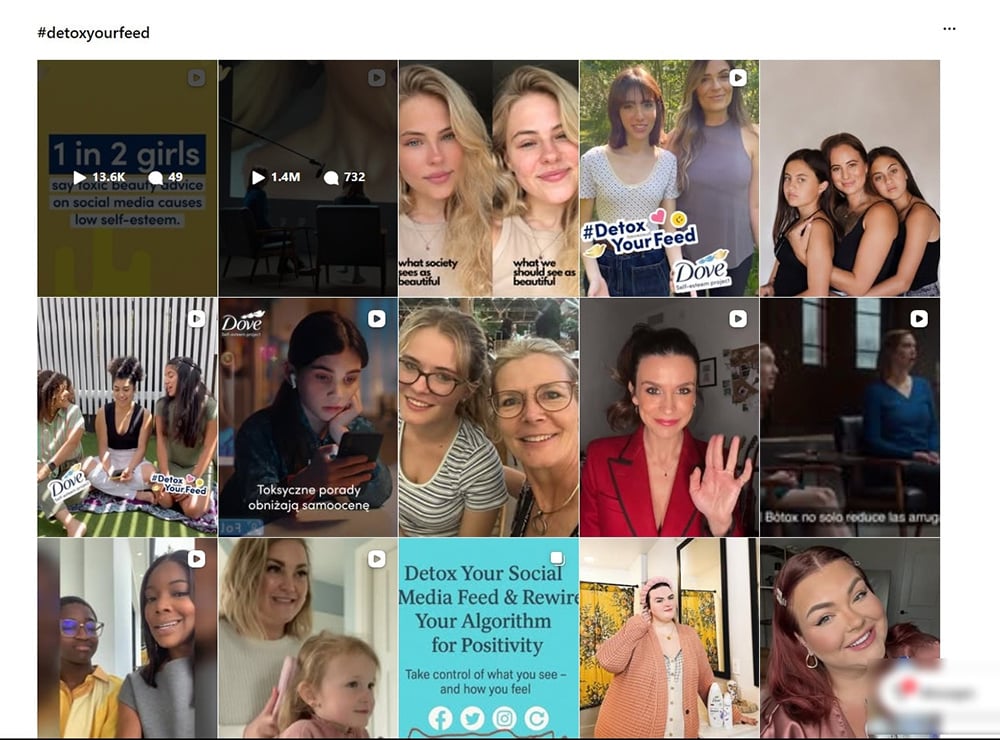
Even Grammy winner Ciara got involved, sharing social posts that felt authentic rather than like a typical celebrity endorsement. The whole thing worked because the message matched what these influencers already cared about.
Here’s how to pick the right social media influencers:
- Check engagement rates first, not follower counts (5,000 active followers beats 50,000 inactive ones)
- Look for people who already post about products like yours
- Make sure their values actually match your brand
- Avoid anyone whose audience doesn’t overlap with your target audience
6. Crowd-Based Social Proof
Which do you think your customers will pick: a product that shows “12,000+ bought?” OR… the item with no purchase numbers at all? Most people choose the popular option because it feels less risky. This is what “crowd-based (or crowd wisdom) social proof taps on.
Seeing that thousands of others have already bought an item removes much of the doubt about the purchase and encourages customers to buy that item.
Take Target, for example. It puts purchase counts right on product listings like “6k+ bought in last month,” so your customers know lots of people are choosing that item.
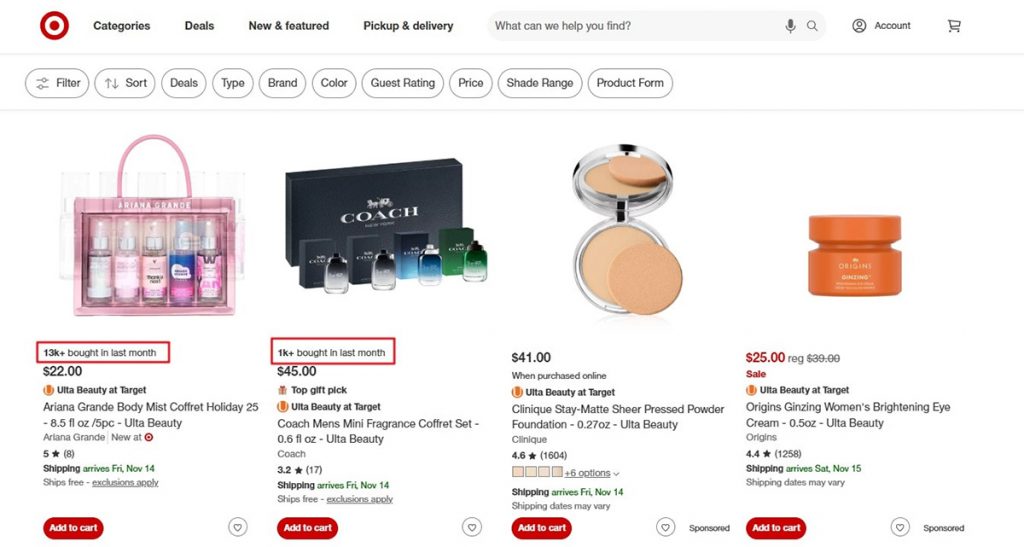
You’ll also see sections for trending items and “Highly rated” badges throughout their site. Even their “Guests also viewed” section works the same way because it shows you what other shoppers found interesting enough to click on.
Collecting Social Proof Effectively with Channelwill
Building social proof doesn’t have to be complicated when you have the right tools helping you out. We know how hard it is to get customers to leave reviews after they buy something (most people just forget or don’t bother).
Our Reviews & UGC app (Trustoo) is a great tool for review collection and management. You can use it to:
- Send requests at the perfect time
- Sync Amazon reviews to your Shopify store
- Automatically translate reviews for international customers
- Create Q&A widgets where existing customers answer questions from potential buyers
- Generate printable QR codes for post-purchase engagement.
Trustoo integrates easily with our Loyalty & Referrals (Trustoo Loyalty) app, too! You can set up these two so that when your customers leave reviews, they automatically earn loyalty points that they can use for future purchases.

Make it easy to build and scale a reliable brand
This creates a nice cycle where satisfied customers feel rewarded for sharing their experience, and are more likely to write reviews for you.
Conclusion: Making Social Proof Your Growth Engine
That’s it for this guide on social proof. You now know how to show visitors that real people have tried your products and actually liked them.
Before we end this, let’s recap the common types of social proof you can start with:
- Customer reviews
- Video testimonials
- Certifications
- Media mentions
- Influencer endorsements
- Crowd-based proof
When people can see that others were happy with their purchase, spending money with your brand feels way less risky.
Ready to make collecting reviews and testimonials way easier? Channelwill Reviews & UGC app (Trustoo) handles the whole process automatically. You can partner it with our Loyalty & Referrals (Trustoo Loyalty) so you can incentivize customers to leave more authentic feedback.
Book a demo with our team to learn how to generate social proof, so you can win more customers and make more sales!

Content Director | 9+ years decoding B2C & B2B eCommerce, obsessed with SaaS and retail storytelling
Words are my weapon—crafting killer copy, decoding trends, and turning data into gold. When not strategizing: Coffee addict, pun enthusiast, and book lover. Ready to level up your eCommerce game? Let’s chat. ☕️