



What do you feel when you see competitors boasting a “perfect 5-star rating” on review sites? It makes you feel jealous and tempted to match that score, right? Well, here’s one truth you should know: Some of them are using review gating, and it’s not a safe strategy to copy.
Review gating is an illegal practice that can get your business in serious trouble with review platforms and government regulators.
Let us help you avoid these costly mistakes. We’ll explain what review gating is and why it’s so risky for your ecommerce business. But to help you build genuine credibility instead, we’ll introduce six ethical alternatives that collect authentic customer reviews.
What Is Review Gating?
Review gating is when businesses screen customer feedback before it goes public. It’s a manipulation tactic where they filter and separate bad reviews from positive ones to improve their brand image online.
I’ll show you how it works with an example. Let’s say Company A (which is a clothing brand) sends an email after each purchase asking customers to fill out a survey about their experience.
Customers who gave high scores get directed to Google Reviews. Meanwhile, the ones who provided low scores get sent to a private feedback form. Some brands may mask it as “personalized support.” But the truth? They’re just hiding negative feedback from potential buyers.
We know that it sounds tempting to do review gating. But this practice is unethical and violates platform rules that most review sites have.
Differences Between Review Gating and Ethical Review Solicitation
Intention and transparency are what distinguish review gating from ethical solicitation.
With review gating, the “intent” is self-beneficial. You control what people see to protect your brand reputation. And while it might get you some extra sales, you can also get in trouble (some consequences are even irreversible).
But when you do ethical solicitation, you prioritize and value honesty. You focus on showing authentic reviews, so you send your customers to the same link and post their experience online without any filtering.
Here are some more differences between review gating and ethical solicitation.
| Aspect | Review Gating | Ethical Solicitation |
| Customer screening | You filter which feedback gets posted and which doesn’t | You let everyone share their thoughts publicly |
| Negative feedback | Gets hidden in private forms | You handle it through customer service |
| Platform compliance | Breaks most review site rules | Follows what platforms actually want |
| Long-term outcome | You risk getting your profile banned | You build real trust with customers |
5 Severe Risks of Review Gating
Now, what happens if you decide to gate your reviews anyway? Some consequences include platform violations, legal troubles, loss of reviews, broken customer trust, and poor business decisions.
Let’s talk about each one more deeply:
1. Violation of Google Review Policies and Other Platforms’ Rules
Your business profile can undergo suspension or permanent penalties when you practice review gating. Google is very vocal about not allowing businesses to “discourage or prohibit negative reviews, or selectively solicit positive reviews from customers.”
Besides Google, Amazon, and Trustpilot (important sites for ecommerce store owners) also have strict anti-manipulation rules to protect review integrity.
Here’s what happens when these platforms catch you:
- Google: It removes or hides violating reviews from public view. Google may also suspend your account from the Google Customer Reviews program. You won’t be able to provide links and ask for reviews if that happens.
- Amazon: It pursues actual lawsuits against sellers and businesses that manipulate reviews and can withhold payments completely. You can lose revenue because of review gating.
- Trustpilot: This platform follows a three-step escalation process. You’ll get warnings first, and formal notices for continued violations. But if you become a repeat offender, Trustpilot will end your business relationship entirely, and you’ll lose access to their platform.
Google doesn’t publicly display flagged businesses, so it was hard for us to show examples. But we saw one good example from Trustpilot.
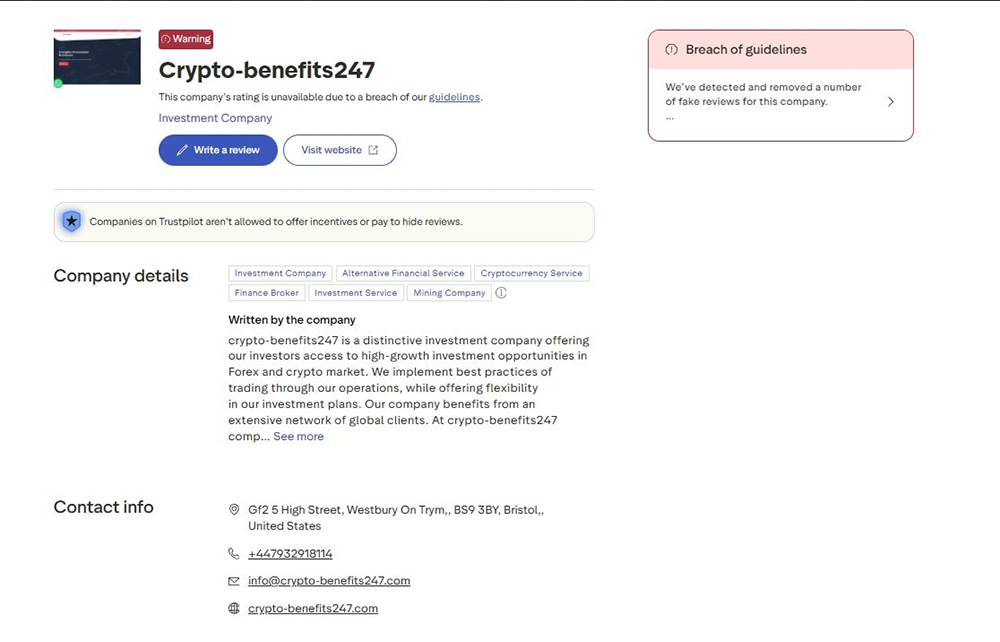
Crypto-benefits247’s profile shows a “Warning” label and “Breach of guidelines” notice. Their rating is also now unavailable, and a clear warning is displayed for customers and other businesses.
2. Compliance Issues and Legal Risks
Review manipulation got so bad that governments created laws to punish businesses with massive fines. And these penalties can actually leave you bankrupt if you’re not careful.
In the US, there’s the Consumer Review Fairness Act that protects customers from threats when writing bad (but honest) reviews. Your business can also get punished if you’re proven to do deceptive review practices. You’ll have to pay up $51,744 per violation.
The UK also just updated its consumer protection laws this year to go after fake reviews. Get caught manipulating reviews, and you could face fines up to £300,000 or 10% of what your company makes globally.
One popular brand that got punished because of review gating was Fashion Nova. FTC caught them posting only positive reviews and blocking most negative reviews from potential customers.
Do you know how much they had to pay? $4.2 million! On top of that, Fashion Nova had to compensate affected consumers, too. Yes, that’s how serious review gating can be.
3. Sudden Loss of Reviews and Rankings
Besides suspension and penalties, review gating can also cause your online reviews to disappear.
Don’t take this lightly. You might think there are too many businesses out there, and it’ll take time to notice you’re manipulating reviews. But Google, Amazon, Trustpilot, and other ecommerce platforms are now using AI to speed up the detection.
Reviews found to have been gated can be deleted, and the platform may remove just the suspected ones or wipe out all your reviews completely. Losing these social proofs can also affect your search rankings on Google.
It creates a “domino effect,” and soon enough… your sales can go down, too.
4. Erosion of Customer Trust and Credibility
One thing we learned from working with many ecommerce brands is this: It’s not easy to fool customers with perfect ratings. Forbes even mentioned that 85% of customers read online reviews pre-purchase, but the same percentage also thinks some ratings and reviews are fake.
In fact, when filtering for businesses to buy from, most customers look for companies with 4-star ratings. They expect some negative feedback mixed with positive feedback. This shows that a pure 5-star rating review might make your score suspicious… and inauthentic.
Actually, you can use the bad reviews to improve your products and customer service. You just have to learn how to respond to them professionally. If you don’t know how, you can read our guide on how to handle negative reviews effectively to hone this important skill.
5. Bad Decision-Making Inside the Business
Here’s the funny irony of review gating: As you try to protect your brand image by blocking negative feedback, you’re also robbing your business of information that could make you more profitable and successful.
How? Well, imagine that you sell coffee machines. You notice that there are so many complaints about the packaging being too “thin” for the fragile item. But instead of reading them, you decided to automate a system where negative reviews about packaging get deleted.
Your team never learns about this problem, so they keep using the same boxes. And now, you’re looking at high return rates and low repeat purchases. It could have been avoided only if you had read, accepted, and monitored those negative reviews.
That’s what review gating does for your business. Besides fooling your customers, it also limits your business growth by keeping you in the dark about important issues and complaints.
6 Ethical Alternatives to Review Gating
If you want to avoid the risks that we mentioned above, here are six safe and ethical ways to collect authentic reviews.
1. Invite Every Customer to Review (No Pre-Screening)
You have to make sure that you send the same message for review requests to every single customer. And that both positive and negative reviews will be available to the public. Doing this will allow you to build credibility with potential customers.
Here are some example sentences you can use for your automated review requests.
- “Hi [Name], thanks for choosing us! We’d love to hear how everything went with your recent order. Mind sharing your thoughts on Google Reviews [or other review platforms]?”
- “Your honest feedback helps us serve customers better. Here’s a quick link to leave a review about your experience.”
- “Hope you’re enjoying your new [product]! Would you share your experience to help other shoppers know what to expect?”
2. Fix the Experience Before You Ask for a Review
If you solve customer problems before asking for reviews, you show that you care about their experience. They’ll appreciate that, and it can reflect on the feedback they leave about your business.
But where can you find these problems? Customer complaints usually show up in your inbox, live chat, or when people ask for returns. You (or your team) can go through these once a week to see repetitive issues. If it’s a new complaint, reach out right away and offer a replacement, refund, or discount to make things right.
Then, after providing a solution, wait a few days and send a follow-up like this:
“Hi [Name], hope your replacement order worked out much better! Thanks for being patient with us. If everything’s good now, would you mind sharing about your experience on Google Reviews?”
3. Give Every Customer Both Public Review and Private Feedback Options
Some customers love sharing their thoughts publicly, while others get nervous about putting their opinions out there for everyone to see. It’s important to provide options and let them choose, instead of gating reviews and controlling what feedback becomes public.
Here’s how you can include both options: “Hope you’re enjoying your recent order! Feel free to leave a review on Google Reviews if you’d like to help other customers, or just hit reply and let us know privately how everything went.”
What we love about this tip is that it makes private feedback acceptable as customers choose it on their own.
4. Target High-Intent Moments Instead of Sentiment Filters
We suggest targeting high-intent moments instead of using sentiment filters. Sentiment filters analyze the emotional tone of existing reviews after they’re posted. High-intent moments focus on reaching customers when they’re naturally most satisfied with their experience.
You have to find this “sweet spot.” It could be a week after delivery, when they’ve tested everything, or right after you’ve solved a problem for them. Then, you can use automated review requests to perfectly time your message.
If you want an easier way to manage this, Reviews and UGC apps like Trustoo can help you automate review timing based on delivery dates and customer interactions rather than trying to guess their mood.
5. Use Incentives Correctly and Transparently
Incentives are not the same as buying reviews when you provide them to encourage customers to leave reviews. You offer the same small reward to everyone who participates, whether they give you positive feedback or rate you 1-star.
You can phrase it like: “We’d love your honest thoughts about your recent purchase. Leave your review on Google, and we’ll send you a 10% discount for your next order,” or “Share your real experience with [product] and get free shipping on your next purchase!”
PRO TIP: Keep your incentives just at the right range (5-15% discounts or free shipping) so they encourage reviews but won’t bring too much pressure to write fake positive reviews.
6. Train Your Team to Welcome Reviews, Not Fear Them
And we saved the best tip for last. Getting your team comfortable with reviews makes everything else work. Because when staff members welcome feedback, customers also feel more encouraged to share their honest experiences.
You can show them how to respond to negative reviews with the 3As:
- Acknowledge the problem
- Apologize genuinely
- Take action to fix it
Teach them to use phrases that are welcoming and accepting, like: “Thanks for letting us know about that issue. Feedback like this really helps us get better,” or “We appreciate you taking the time to share your experience with us.”
The biggest thing you can do to help your staff is change their mindset on negative feedback. Avoid showing frustration or getting upset about criticism. Instead, really show that you see them simply as “customers’ opinion” on what areas you can improve on.
Conclusion: Transparency Triumphs Over Deception
That’s it for this article! Review gating is tempting when you’re trying to boost (and protect) your online reputation. But the risks you get from it far outweigh any short-term benefits you might see. You can face serious legal issues and damage your customers’ trust.
So, focus on ethical review solicitation instead. You can go back to the six ways we shared earlier: invite everyone to review, fix problems first, offer both public and private feedback options, time your requests right, use incentives transparently, and train your team to welcome all feedback.
But if you want a more efficient way to apply these strategies, try Trustoo’s Reviews and UGC platform to get authentic customer feedback more easily and time your requests perfectly.
Book a demo today with Channelwill to see how it works.

Content Director | 9+ years decoding B2C & B2B eCommerce, obsessed with SaaS and retail storytelling
Words are my weapon—crafting killer copy, decoding trends, and turning data into gold. When not strategizing: Coffee addict, pun enthusiast, and book lover. Ready to level up your eCommerce game? Let’s chat. ☕️