Bad reviews are so common in ecommerce. In fact, Gominga found that customers are 21% more likely to speak up after a bad experience than a good one.
Still, one bad review doesn’t have to ruin your brand. It might feel discouraging to get one (especially if you’re giving your 100% all the time),… but you can bounce back IF you know how to respond to a bad review properly.
The good news? It only takes five simple steps to do that.
In this article, we’ll share with you the risk of negative reviews, why it’s a must to respond to each one, how to create the best replies, and the mistakes you have to avoid when answering bad reviews. We’ll also give you some examples of a good response from popular brands you can get inspo from.
The Costs of Negative Reviews
One negative review on your product page can kill purchase intent by 42%.
Here’s how that looks in real life: Imagine you run a Shopify store selling kitchen gadgets. A week ago, you got a detailed one-star review about how “poor quality” your knife set was… and how it wasn’t worth it for a $150 price tag.
This product used to get 1,000 visitors per month and a 10% conversion rate (so that’s 100 product sales/month).
If we apply the stat above, around 420 of those monthly visitors will decide not to buy after reading that review. The 100 sales can also go down to 58. That’s a possible $6,300 lost sales… just because of one review.
Of course, it’s not always the case, but it shows how dangerous negative reviews can be for your business.
What Else Gets Hit
Besides your future sales, negative feedback can also affect your online visibility and customer acquisition. Here’s why:
- Your search rankings drop: This is more usual for local businesses. Google values review ratings and spotlights highly rated places. If your shop scored around 3.2 stars, your competitors with better ratings will definitely outrank you.
- High ad spending but little to no conversion: 86% of people hesitate to buy from stores with too many negative online reviews. No matter how much you spend on ads to bring traffic, it’ll be hard to convince them to buy from you.
Why Respond to Negative Reviews?
Some reasons why it’s important to respond to negative reviews are that it can help you reduce them, influence your potential customers’ decisions, improve your revenue, and also save your reputation in the long run.
Remove Bad Reviews (and Win Customers Back)
Bazaarvoice research found that 34% will actually delete their negative review after getting a helpful response from you.
Some customers simply want to be heard on the issues they have with your product. They don’t mean any harm to your business… and will be very happy to change their opinion if you provide a satisfying reply. Plus, if you successfully solve their problem, you can even convince them to write positive feedback (nice!).
The same research also mentioned a greater benefit: Improved repeat purchase rate. Customers who receive replies to negative reviews are twice as likely to buy from you again. You see, one good response and you get that “second chance” to prove they didn’t make a mistake shopping with you.
Influence Potential Buyers’ Decision
Do you know who else is curious about how you respond to negative customer feedback? Your potential customers. Podium’s report revealed that 56% of buyers have changed their opinion about a business after seeing its replies to reviews.
Let’s say you received two bad reviews in just a month. Around the same time, ten interested shoppers landed on your product page and stumbled on those comments. If you didn’t reply, all of them might have clicked the “close” button without much thought. But because you provided a detailed, apologetic, and helpful response, six of them decided to check out the product.
So why does this work even for people who weren’t affected by the problem? Good question! They view how you talk (and handle issues) with other buyers as a sneak peek of how you’ll treat them in the future… if the same happens to them.
Increase Your Revenue and Customer Loyalty
Responding to negative reviews can also improve your sales directly. Companies that reply to at least 25% of their reviews make 35% more in earnings. Plus, consumers also spend up to 49% more money at stores that take the time to respond to customer feedback.
You might think that it’s a “simple acknowledgement” and it won’t do much, but consistently responding to customer reviews is sometimes enough to make them more confident in your brand. And that confidence shows up in how much they’re willing to spend per transaction.
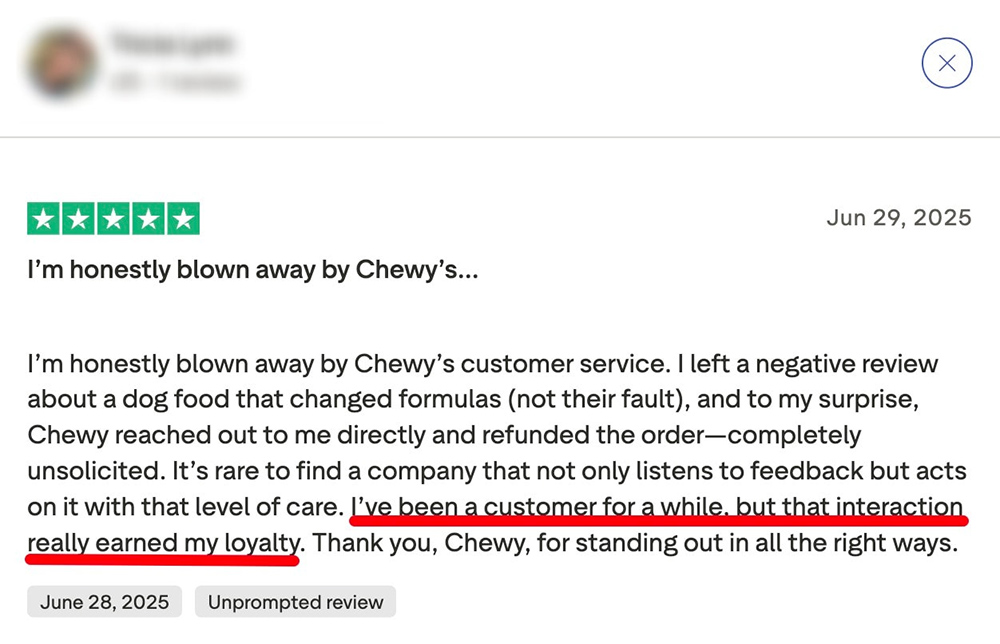
It can even become a strength that your brand gets known for, and your customers’ reason to stay. Take Chewy as an example. If you look online, you’ll see how good its reputation is in handling customer feedback (even earned an article on Forbes!). Here’s one example where a customer mentioned how the Chewy team’s response made her a loyal customer:
Prevent Bigger Reputation and Sales Damage
Not responding to feedback is considered poor customer service, and it can drive away 14% of your existing customers.
Ignoring negative reviews and letting them consume your website, Google reviews, social media, or review sites will take a toll on how people see your business.
If you don’t do anything to change how you manage reviews, you can expect your brand’s credibility to take a nosedive, together with your revenue.
One of our clients’ yearly sales went down by 12% because they couldn’t reply to negative reviews. They had no way to manage all of them, so they missed out on so many complaints.
But after using our Reviews & UGC app to collect and monitor all their feedback (plus hiring a dedicated team), they were able to improve their sales and rebuild their brand’s reputation.
So, what can you do to handle reviews better and get these benefits? That is what’s next.
The 5-Step Formula for Responding to Negative Reviews
Simply remember AREAF when you reply to bad reviews:
- Acknowledge and Apologize
- Respond Quickly and Professionally
- Engage to Resolve the Issue
- Act on Feedback
- Follow Up and Ask for a Second Chance
Let me discuss each one in detail.
Step 1: Acknowledge and Apologize
You need to show unhappy customers that you understand their pain well and that you really are sorry for what happened to their order… or whatever the issue is. It’ll help you “de-escalate” the situation and prevent it from becoming a bigger problem.
Go for a calm and respectful tone. If you want to make sure you achieve that, you can ask someone from your team to read the whole reply before posting it (better safe than sorry). And here are some phrases you can use to show more empathy:
- “Hi [Name], we’re really sorry to hear this. It’s not the experience we want to give you.”
- “Dear customer, thanks for your honest feedback, and we [mention the issue here].
- “Hi [Customer Name], we’re so sorry your order arrived late. We know how frustrating it is to wait for this long and still not receive the item.
This Home Depot’s review response is one of the best examples for this step:
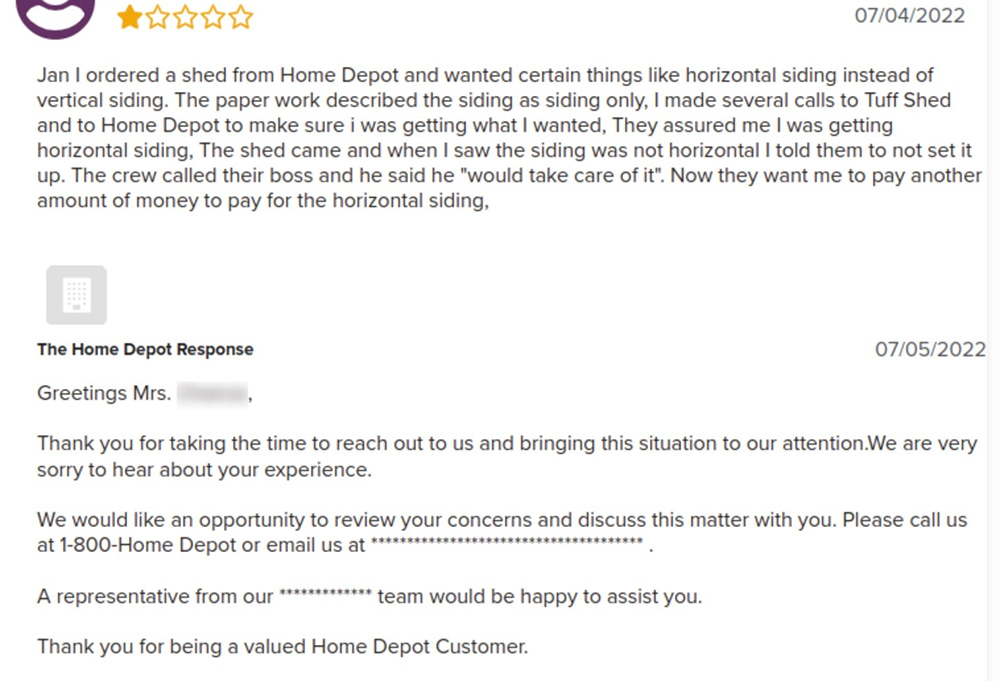
See that? Its representative didn’t start with an excuse or write a long explanation, but proceeded to thank their customer for letting them know about the issue and apologize right away.
Step 2: Respond Quickly and Professionally
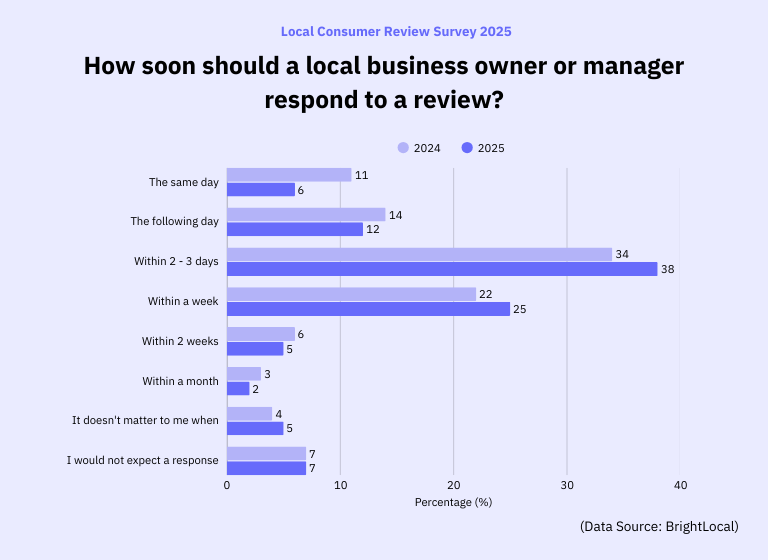
BrightLocal’s 2025 survey reveals that 38% expect a response within two to three days, 25% within a week, and 12% within the same day. The time you take to reply shapes how customers perceive your brand.
One brand that has been consistent with poor response behavior is Zara. We’ve checked different platforms like Consumer Affairs, Yelp, and Trustpilot, and customers describe their service as rude, unhelpful, and unresponsive.
Many mention waiting weeks for refunds or updates, dealing with “robots” on chat, or being ignored on WhatsApp and email.
Some said they were even hung up on by support staff. After checking all three sites, we haven’t seen a single visible reply from their customer service team.
No acknowledgment, no apology, nada. Because of how Zara handled complaints, they’ve lost loyal customers who now discourage others from buying. Here’s one example of a negative review they received, and this is from one of its loyal customers (ouch):
Here’s how you can respond better and in a more professional manner:
- Check new reviews daily and prioritize unresolved (or unreplied) comments.
- Keep your answers short and specific.
- Train your team to use clear, empathetic language when handling complaints.
Step 3: Engage to Resolve the Issue and Move Conversation Offline
Besides receiving an apology, most customers leave negative comments because they want someone to help them with the issue. One report shows that 45% of consumers will support a business that shows effort in resolving problems (great!).
But here’s the thing: you want to move the conversation offline because it’s much safer and more strategic.
It gives you space to solve the issue, maintain a positive impression, and make your customers more comfortable in sharing their experience. Plus, it protects any personal details and avoids the bigger brand damage by lessening exposure to the public eye.
Here are some examples of what to say:
- “Hi [Name], please contact us directly at support@[store].com with your order details.”
- “Could you send us a quick message at [business email] so we can offer you some solutions?”
- “Please reach out to [contact details] and someone from our team will assist you on this.”
Step 4: Act on Feedback and Explain What’s Been Done
You want to show that your brand is 100% ready to solve the customer’s problem. Besides how you apologize, your customers also pay attention to what you do after.
Plus, we suggest that you communicate what you’re planning to do (or what you’ve done) to your customers. So, they’ll know that you’re really taking action, and that can help rebuild the lost trust.
Here are some examples of short, direct words you can use and when they work best:
- Reviewed: You can use this to indicate that you’ve checked your customer’s purchase history or order details.
- Fixed: This is the best if the issue is easy to solve and you have already corrected it before responding.
- Processed: You can apply this if you’re talking about refunds, exchanges, or replacement requests.
- Resolved: If you already closed the case, this is the ideal way to wrap everything up.
- Completed: Like resolved, you can use this when all steps are finished and you’ve followed through (as promised).
Pro tips:
- Be clear about what happened before offering a solution.
- Confirm the customer agrees with your next steps before acting.
- Document recurring issues so you can take action on them (and avoid receiving the same complaints).
Step 5: Follow Up and Ask for a Second Chance
And of course, make sure to follow up and ask how things are going. You can use this opportunity to gain positive reviews (and also delete or remove the bad ones).
Let’s say a customer left a one-star review because their order arrived late. You apologized, processed a refund, and included a complimentary service for the inconvenience. A few days later, you check back to make sure they received it and that everything’s sorted out. That simple “check-in” can change how they feel about your brand and often ends with a positive experience shared in a new review.
When asking for a second chance, wait until the issue is completely resolved, then thank the customer for allowing your team to fix it. Then, that’s when you can politely mention that you’d appreciate an updated review.
Common Pitfalls to Avoid When Dealing with Negative Reviews
Here are some things you have to avoid when responding to your customer’s bad review:
Arguing or Getting Defensive with the Reviewer
No one wants to receive negative reviews because they hurt, and the usual reaction you might have is to defend yourself and prove that your customers were wrong.
You should avoid getting into an argument because it’ll never be good for your brand image. You might even be branded as “unprofessional.”
It’s better to send a polite and straight-to-the-point message. Say something like, “I understand how this must have been hard for you, and we want to say sorry that it ruined your day.”
Then, you can focus your energy on improving the aspects of the business that the bad review is about.
Too Generic or Template-Heavy Responses
AI might be handling a lot of customer service these days, but people still crave human connection. That needs to show up in how you reply to their reviews, too.
We’re not telling you to ditch templates or stop asking ChatGPT for help (those tools are honestly lifesavers). But, you’ve got to actually read what the customer’s complaining about, tweak your template so it fits their specific situation,… and write it in a way that sounds like your brand.
Here’s what we mean by turning a bland template into something more personal:
- Generic: “Thank you for your feedback. We value all our customers’ feedback.” ❌
- Personalized: “Hi Michelle, thanks for reaching out about the sizing issue. We’re sorry to hear that the jacket didn’t fit right, and we’d like to help you exchange it.” ✅
Failing to Move the Conversation Offline
Public response to a negative review is great for showing you care. But you need to take things private if you want to actually solve the problem.
Besides the privacy risk, your customers won’t be able to express themselves freely because they’ll be worried about others reading their complaints.
Plus, there’s another possible issue here: Other customers (who had the same issue) might compare how you handle their situation vs. someone else’s,… and that can affect customer trust.
Imagine you sell golf equipment and one of your customers, named Adam, left a bad review about his damaged putter. You could reply publicly with: “Hi Adam, we’re sorry about this. Please email [email protected] with your order details so we can fix it.” Then, offline, you could ask for photos, send a replacement, and have more exchanges until the issue is fully resolved.
Offering Incentives Publicly
Have you ever offered a refund or discount publicly and then got flooded with similar complaints asking for the same thing? That’s the trap of public compensation. It encourages people to leave fake bad reviews just to score the same deal (not great!).
You should still make things right for customers who had a genuinely negative experience. The problem is doing it where everyone can see.
The best way is to offer the incentive once the customer contacts you directly. Talk things through in private, confirm what happened, and then offer compensation that fits or is relevant to their complaint so you can improve the customer experience.
Examples of Responses to Negative Reviews You Can Learn From
We’re now done with the steps. It’s time to show you examples of popular brands that apply the steps above and maintain a positive online reputation because of that.
Example 1: Glossier’s Response to a Fulfillment Issue
One customer left a negative review about receiving only one out of three items they ordered and being ignored by the makeup brand’s customer support.
Here’s how Glossier responded… and earned a clap from us:
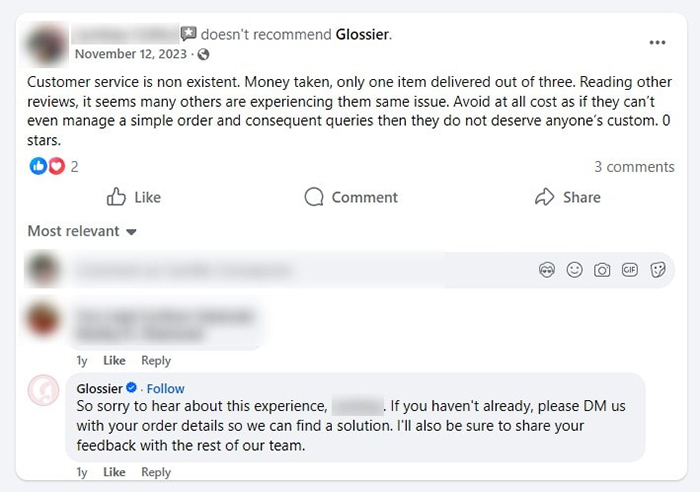
What makes this response great is how it’s empathetic, and it focuses on the solution. It acknowledged the problem, moved the convo to a private channel, and mentioned they’ll share the feedback with their team for awareness (the customer won’t have to repeat the issue again).
Example 2: Gap’s Reply to a Lost Package
We got this next example from Instagram. Gap received a complaint from a customer who never got their package and couldn’t file a claim.
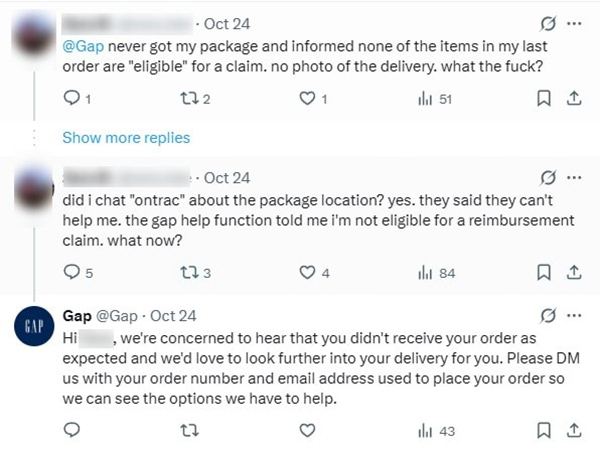
As you can see, the clothing brand responded promptly and sent a personalized reply. The tone is also calm and friendly throughout. There’s no trace of a ‘robot-sounding’ sentence.
Gap also asked the customer to DM with their order number and email so the team could work on the issue privately.
Example 3: Dyson’s Response to a Product Quality Complaint
We’ve seen so many ecommerce stores that avoid negative reviews on their website, and that’s not a good reputation management practice. But one brand that is doing it right is Dyson.
Just look at this example. One of their customers complained about their purifier being too loud and feeling cheaply made. Like the first two examples, Dyson responded politely:
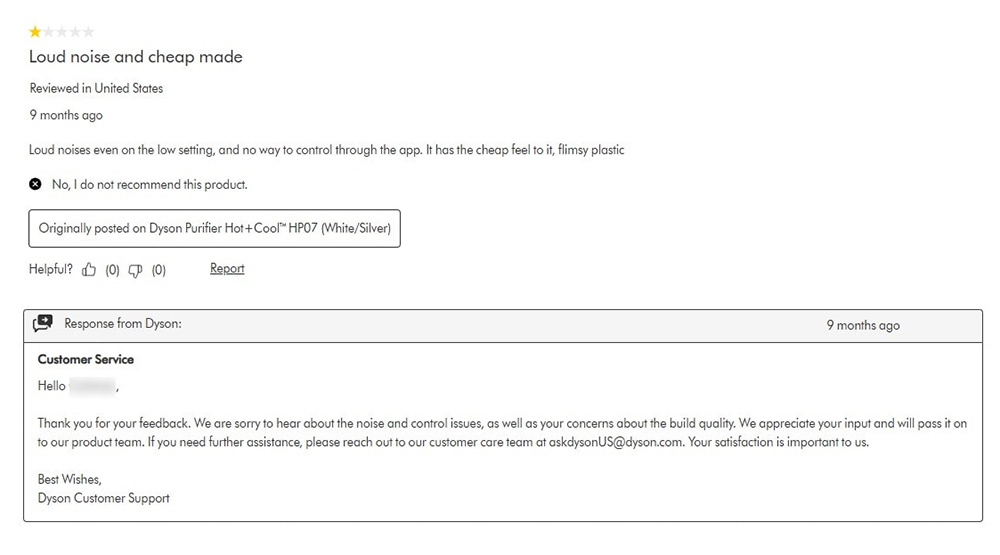
It started by thanking the customer for their feedback and apologizing for the issues. Dyson’s customer support also mentioned passing the input to their product team.
Notice how they gave an actual email address? So, customers don’t have to find out where to reach out. That’s a great move.
Example 4: Best Buy’s Response to a Service Complaint
Best Buy is one of those brands that actually pays attention to Google reviews. When one customer left this detailed one-star review about a terrible in-store experience with a canceled laptop order and rude staff:
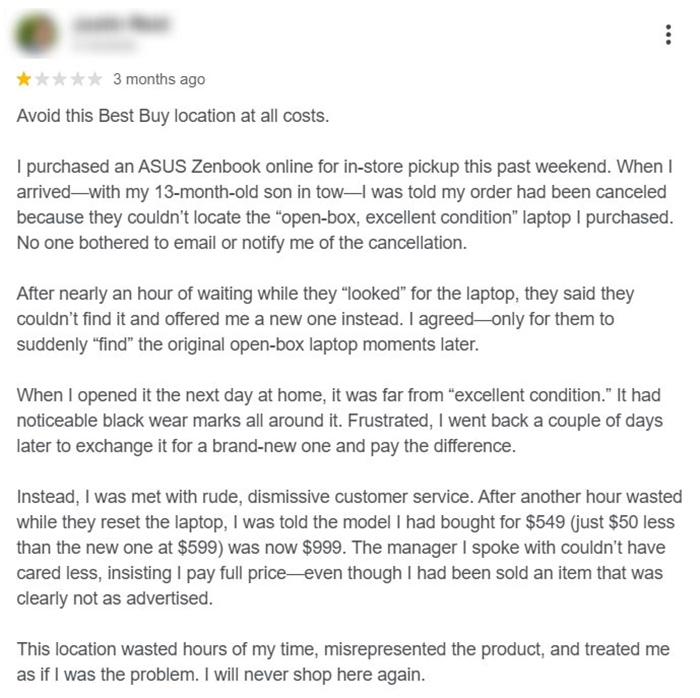
The electronic store’s customer representative (Vanessa) responded quickly and in detail. She apologized plus encouraged the customer to reach out to them.
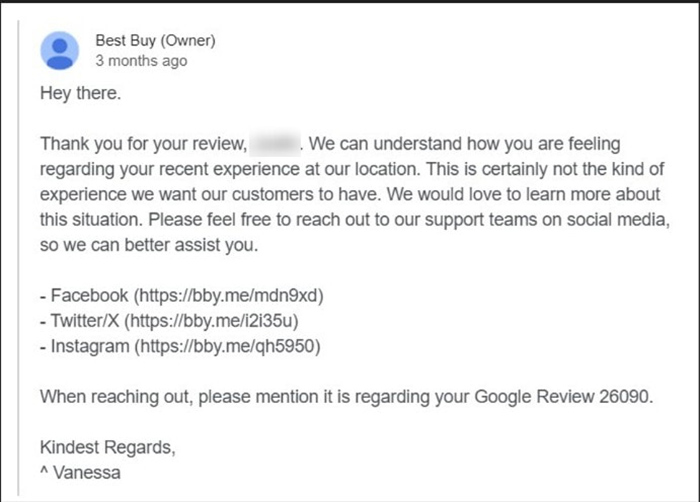
What we like about her reply is that she provided different platforms for the customer to choose from. It also looked like Vanessa created a ticket right there and then.
The last thing you want to happen is to tick off an already disappointed customer. Best Buy did a great job by setting everything up so the customer wouldn’t have to repeat their story when they contacted support.
Conclusion
That’s it for this article. You can now answer negative reviews like a pro with the steps and the examples we provided (awesome!).
Remember, you can make bad reviews a way to show existing and potential customers how much you care about their experience. Brands that handle complaints well often end up with stronger reputations… just look at Gap, Best Buy, Glossier, and Dyson.
Now it’s time for you to apply the five steps and work on your responses.
Ready to take that next step? Channelwill Trustoo helps you collect, manage, and showcase authentic reviews that turn feedback into steady growth.

Make it easy to build and scale a reliable brand
Book a demo with our team to know how to get started.

Content Director | 9+ years decoding B2C & B2B eCommerce, obsessed with SaaS and retail storytelling
Words are my weapon—crafting killer copy, decoding trends, and turning data into gold. When not strategizing: Coffee addict, pun enthusiast, and book lover. Ready to level up your eCommerce game? Let’s chat. ☕️