



Have you noticed how it’s harder to get more loyal customers these days? Buyers are now more “open” to trying new brands, even for products that they often purchase. If you’re in the same boat, you can see its effect on your repeat purchase rate and overall sales.
We’ve been helping ecommerce brands for over 10 years. And customer referral programs have been consistent in building solid relationships and bringing in high-value customers.
Here’s proof of that claim: MarketingLTB shared that 61% of marketers say referrals deliver the highest-quality leads. On top of that, referred customers are 37% less likely to abandon brands.
So in this article, we’ll show you how to create your own referral program, share real examples from successful brands (where you can get some inspo), and cover common mistakes to avoid.
What is a Customer Referral Program?
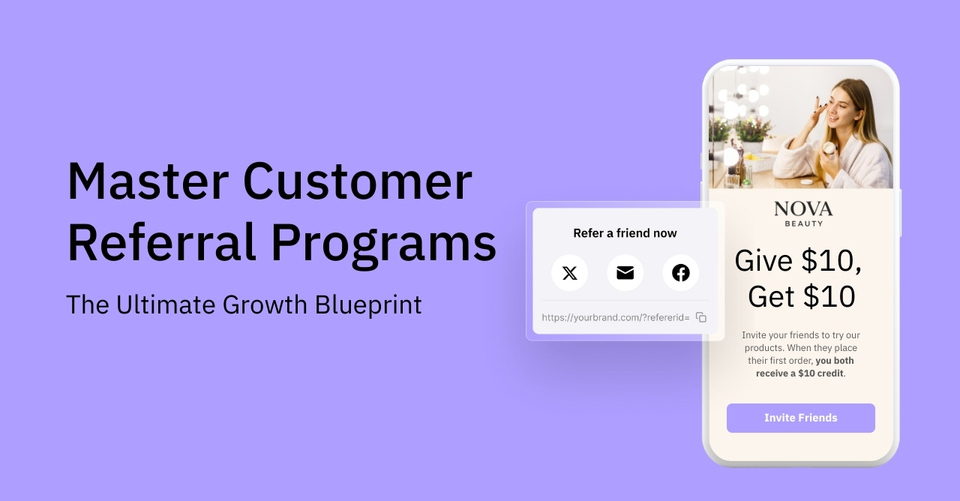
A customer referral program is a marketing strategy that brands use where they reward their existing customers (referrers) every time they bring in a new customer (referred/referrees). The incentive can be discounts, free items, gift cards, store credit, or points redeemable in-store.
It has a pretty simple mechanics: Your customers join your referral program and get a special link or code they can share. When someone uses that link or code to buy from your store, your existing customer gets their reward.
Imagine you ran a clothing store and offered $15 off for every successful referral. Mitch (one of your repeat customers) shared his referral link with his family members. After a few weeks, his sister bought a $50 dress using his link. Mitch then received $10 in store credit for his next purchase.
But is customer referral a type of traditional acquisition method? No, it’s not.
Customer Referral Program vs. Traditional Customer Acquisition
One major difference between customer referrals and traditional customer acquisition is where your leads come from.
With referral marketing programs, your satisfied customers bring in new people by recommending your brand to 3Fs (friends, family, and followers). But for traditional acquisition, you have to use paid ads, cold emails, or direct marketing campaigns to be in front of prospects. Most of the time, they are not aware of your store, so there’s no “connection.”
Referral programs also require less effort on your part, but they can give you the best ROI in the long term. Meanwhile, traditional customer acquisition methods are often more expensive and provide short-term gains.
Here’s a comparison table if you want to look closely:
| Aspect | Customer Referral | Traditional Acquisition |
| Lead Source | Existing customers | Ads and cold emails |
| Average Cost per Customer | $2-$10 | $21-$377 |
| Trust Factor | High | Low |
| Average Conversion Rate | 10-30% | 7.52% (Google Ads) |
| Customer Quality | High-quality | Low to high-quality |
Benefits of Customer Referral Programs
A great referral program can improve your conversion rates, lower your customer acquisition costs, and increase lifetime value. It also helps you track word-of-mouth recommendations and build stronger customer loyalty. Here’s how each benefit works for your store:
Higher Conversion Rates
Businesses with referral programs see 3 to 5x higher conversion rates than other marketing channels.
But how does this happen? Since your referred customers come through personal recommendations from people they trust, they are already “pre-qualified” and interested in what you’re selling.
They have a different mindset than someone who clicked on a random Facebook ad. They probably heard good things about your store, and that’s an “advantage” you can enjoy with referral programs.
Lower Acquisition Costs
Besides better conversion rates, a successful referral program also reduces how much you spend to gain new customers. The average ecommerce business now loses $29 for every customer they get through paid ads. It’s now 3x the cost (used to be $9 only in 2013).
Referral programs replace this expensive ad spend with rewards for your existing customers. You give your happy customers a $10 credit when they bring someone new, and you’re not stuck paying ads just to get a click or “possible” sale.
Higher Customer Lifetime Value
Your customer lifetime value shows the possible long-term revenue you can get from each person who shops with you. And with a referral program, you can push that number up.
Existing customers who join your referral program feel rewarded for their loyalty. So they buy more, stay longer,… and even encourage others to try out your products.
But that’s not all. Even those that are “referred” contribute to higher revenue and customer retention. Harvard Business Review actually mentioned that they have a 25% higher lifetime value compared to non-referred customers.
Scalable & Measurable Word-of-Mouth Marketing
Another benefit that we love about having your own referral program is the system. It feels amazing to be “recommended” to new customers, but without a proper system, you’d have no idea who your top brand cheerleaders are (and how much they are bringing in).
Plus, the rewards you provide in the referral program become the perfect “reason” for them to make more effort in promoting your brand. And as your customer base grows, each new buyer becomes a possible referrer.
That’s how great word-of-mouth marketing is: you don’t spend money on ads, and you reward the right people “fairly.” A great win on both sides, right?
Stronger Customer Loyalty
All of the benefits we mentioned connect to building solid customer loyalty. Your referral program can help build that “deeper emotional connection” between your business and your customers.
Imagine you have a customer (let’s name him Matt) who’s been shopping with you for two years. You finally decided to launch your referral program and encouraged him to join. Matt starts sharing his referral link with friends, earns some rewards, and watches three of his buddies become regular customers too.
From being a “normal” buyer, Matt is now a brand advocate. He’s actively rooting for your business, referring more people he knows, and getting ongoing benefits from their purchases.
How to Build a Customer Referral Program Step by Step
We’re now done with the benefits, so now it’s time to create your own referral program. Here’s a complete guide you can follow:
Step 1: Set Clear and Realistic Goals
We know how exciting it is to design a program. But it’s very important to have a clear, written goal and know your KPIs before doing anything. They’ll be your “direction” and help keep you safe from setting unrealistic numbers.
If you’re not sure what to focus on, start with these four metrics: participation rate, referral rate, conversion rate, and cost per referred customer. You can use this table as a guide:
| Metric | What It Means | Good Benchmarks |
| Participation Rate/Share Rate | Percentage of customers who actually share their referral link after making a purchase | 5% to 15% |
| Referral Rate | Percentage of your total store revenue that comes from referred customers | 2.3% |
| Conversion Rate | The percentage of people who visit through a referral link and complete a purchase | 3-5% |
| Cost per Referred Customer | How much do you spend on rewards to get one new customer | Should be $20-25 less than your current acquisition cost (CAC) |
Your goals will change once your program starts to grow. Be prepared with that, don’t be afraid to tweak and adjust your targets as you learn what works for your specific customers.
PRO-TIP: Review your numbers regularly (monthly if you’re a bit aggressive, or quarterly) so you can adjust your rewards and messaging before your results get affected.
Step 2: Choose the Right Reward Model
The next step? Pick the program type for your referral marketing strategy and the rewards you want to offer. You have to brainstorm a bit here… because some programs are simple to set up while others need more planning.
- Direct referrals: This is the “classic approach” where your customers share their personalized links when they genuinely like a product.
- Incentive programs: Here, you pay customers back when they refer someone who buys from your store.
- Tiered programs: Your customers unlock better rewards as they refer more people, so someone who refers 10 friends gets a bigger bonus than someone who refers just one or two.
- Review-based referrals: This program is when you reward your customers for writing honest reviews on Google, your website, or social media.
- Gamified referrals: You add “fun” elements like leaderboards, badges, or monthly competitions where your most active referrers can win special prizes or recognition.
And as for the rewards, you can opt for cash rewards, store credit, discounts, free products, and gift cards. We suggest that you mix different types to keep things fun for your loyal customers.
One-Sided vs Two-Sided Rewards
Another thing you have to decide here is whether to reward both the referrer and referred, or only the former. This is more common for incentive referral programs, and here’s a table for a quick overview:
| Reward Type | How It Works | Best For | Example |
| One-Sided (Single-Sided) | Only the referrer gets rewarded | Loyal customers who will share without extra incentive | “Get $15 when a friend makes their first purchase” |
| Two-Sided (Double-Sided) | Both people get something | Most stores (higher conversion rates) | “You get $10, your friend gets $10 off” |
One-sided incentives have been used for many years, but two-sided rewards are better. You know… it’ll convince the referred to buy from your shop if they get something, too.
PRO TIPS:
- Start with two-sided rewards since they convert better, even though they cost more upfront
- Make the new customer’s reward slightly bigger than the referrer’s reward to motivate that first purchase
- Set minimum order amounts to prevent people from gaming the system with tiny purchases
Step 3: Select a Referral Marketing Tool
Let’s say you just launched your referral program and got 20 sign-ups for the first day. Then, 50 the next day, and another 100 after two weeks.
Do you think it’s possible to keep track of who referred whom and calculate rewards? Yes, it can be. But you might lose time (and your mind) trying to manage everything manually.
That’s why we suggest you use referral tracking tools. You can choose from these main options:
| Tool Type | How It Works | Pros | Cons | Best For |
| Basic Coupon Codes | Customers share discount codes | Simple, cheap | No real tracking, easy to abuse | Small stores that have just started |
| Dedicated Referral Software | Platforms built only for referral programs | Advanced tracking, lots of features | Can be expensive, with a steep learning curve | Ecommerce stores focused mainly on referrals |
| E-commerce & Loyalty Platforms | Tools that combine referrals with loyalty points | All-in-one solution, easier setup | May have fewer referral-specific features | Most ecommerce stores |
| Enterprise Platforms | Advanced solutions with custom features | Highly customizable, advanced analytics | Can be expensive and a bit complicated to set up | Large brands with big budgets |
All of them are great and have their own pros and cons. But we suggest ecommerce loyalty programs as they fit most store owners’ needs and budgets better than other options.
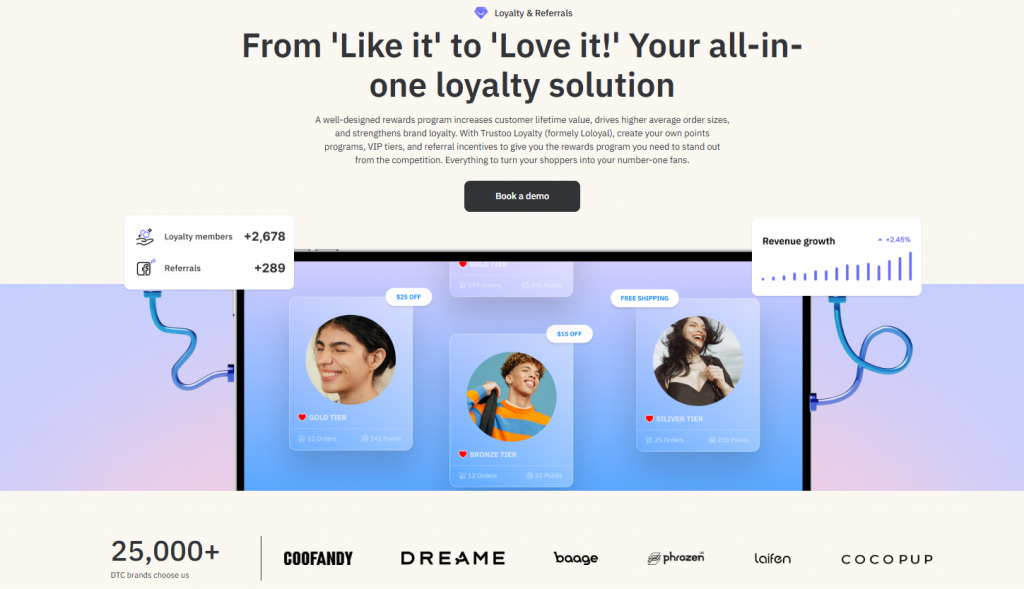
One great example is Trustoo Loyalty. You can use it to reward customers who successfully bring friends to your store through personalized sharing links. It works well for Shopify DTC brands (whether small, medium-sized, or enterprise), but it’s affordable and easy to set up.
The platform also automatically tracks referrals and calculates rewards, so you don’t have to do everything by yourself.
Step 4: Identify and Activate Happy Customers
The best way to speed up your referral marketing growth is to take advantage of your “happy customers.” They are the ones who enjoy buying from you and have been satisfied with your products and services so far.
You can use these metrics and scores to find them:
- Net Promoter Score: Pick your customers who scored 9 or 10 about the likelihood of recommending your brand to others.
- Customer Satisfaction Score: People who rated your customer support service 4 or 5 stars mean they had a great experience with your brand.
- Customer Lifetime Value: Existing customers who have spent more than your average shopper over multiple purchases.
Also, check for customers who’ve left positive reviews without being asked, and those who actively engaged with your social media posts.
Of course, you need to be strategic in how you’ll approach them. We suggest that you contact them a few days (or weeks) after their recent purchase.
You can then send them a personal thank-you email where you also mention your referral program and the benefits they can get. Prompts like “Love what you bought? Share it with friends, and you both get $10 off your next order” can also work. Or… you can add referral invitations to your post-purchase follow-up sequences.
Step 5: Keep Monitoring and Optimizing
Here’s one thing you need to remember: Your referral program won’t run itself perfectly from day one. Yes, you can automate some parts (like sending rewards or tracking referrals). But you have to calculate and review how it’s performing.
You have to check your referral rate, conversion rate, and cost per referral every week to spot any sudden drops or improvements.
Other than your KPIs, it’s best to get feedback from your customers to see how they actually feel about sharing your brand. You can ask simple questions like: “Was the reward worth it?” or “Did the process feel easy?”
You never know, but you might find complaints that you didn’t expect at all. That can be issues like a laggy rewards app or complicated rules.
PRO TIPS:
- Test higher rewards during holidays when people are already shopping and sharing gift ideas
- Add new ways to share, like social media or text messages, if you only have email sharing
- Send special thank-you messages or early access perks to your most active referrers
Common Mistakes That You Should Avoid
The following mistakes you need to dodge include unsustainable rewards, complicated rules, ignoring fraud, and tracking the wrong numbers. Your referral process will be more effective if you become aware of these issues early:
Making the Program Unsustainable
One common mistake ecommerce merchants make is offering rewards that are too generous before they understand the actual value of a referred customer.
They might give $25 off to both the referrer and the new customer, thinking it will drive more shares, but then realize each referral costs more than the profit from the sale.
Another problem is attracting deal hunters instead of loyal customers. When your rewards are the main reason people join your program, you end up with customers who only want the discount and rarely buy again (which defeats the whole purpose of building long-term relationships).
Having Overcomplicated Rules
You also have to avoid making your referral program too confusing for customers to understand. Some referral programs fail because people give up before they even try to share their link due to complicated terms and conditions.
Here are some examples of rules that can lessen participation:
- Complex tiers: “Share with one friend and get $5 back. Three friends means $10 for you, and ten friends means $20! Just make sure everyone spends at least $50 in their first month, or the deal’s off.”
- Too many restrictions: “Get referral bonuses on any purchase except ‘on sale’ items, gift cards, bundle deals, or orders under $30.”
- Tight time windows: “Referred customers must use this code within 72 hours of registration and complete their order within 3 business days.”
- High spending requirements: “Referred customers need to spend over $100 when they first shop with us, then another $75 on their second visit.”
Your rules have to be simple enough that you can explain them in one sentence. If you need an FAQ page just to make the mechanics clear, it’s probably too complicated. And your customers might not have the time to read everything.
Ignoring Fraud and Self-Referrals
Fraud and self-referrals cost you money without bringing in any new business. People use different emails to refer themselves or post their referral codes on coupon sites to collect rewards they don’t deserve.
This messes with your numbers and makes your referral program look successful when it’s actually losing money (which is the last thing you want when trying to grow). Your reports might show tons of new sign-ups, but your bank account tells a different story because you’re rewarding customers who already exist.
Common fraud includes customers creating multiple accounts to refer themselves, bots making fake profiles to harvest cash rewards, and people sharing referral codes on deal forums instead of with actual friends.
PRO TIPS:
- Make new customers spend at least $25 before anyone gets rewards, since it’s much harder to fake real purchases than email sign-ups
- Watch for red flags like five referrals from the same address in one day or accounts created seconds apart
- Ask for phone verification when someone signs up, since most people won’t use multiple phone numbers for fake accounts
Not Tracking Numbers That Actually Matter
Would you invest in a billboard without knowing how many people saw it or bought from you afterward? Many store owners make this same mistake with their referral programs by tracking clicks and sign-ups instead of actual sales and profit.
The real numbers you need are conversion rates from referred customers, their average order value, and how much they spend over time. Without this data, you can’t tell if your referral incentives are attracting quality buyers or just people hunting for free stuff.
This is where referral program software becomes valuable because it tracks everything automatically. Trustoo Loyalty, for example, monitors referred customer behavior and shows you which referrers bring in the most valuable long-term customers. You get clear data on what’s working instead of guessing based on vanity metrics.
6 Most Successful Customer Referral Programs in Retail
1. Nuki
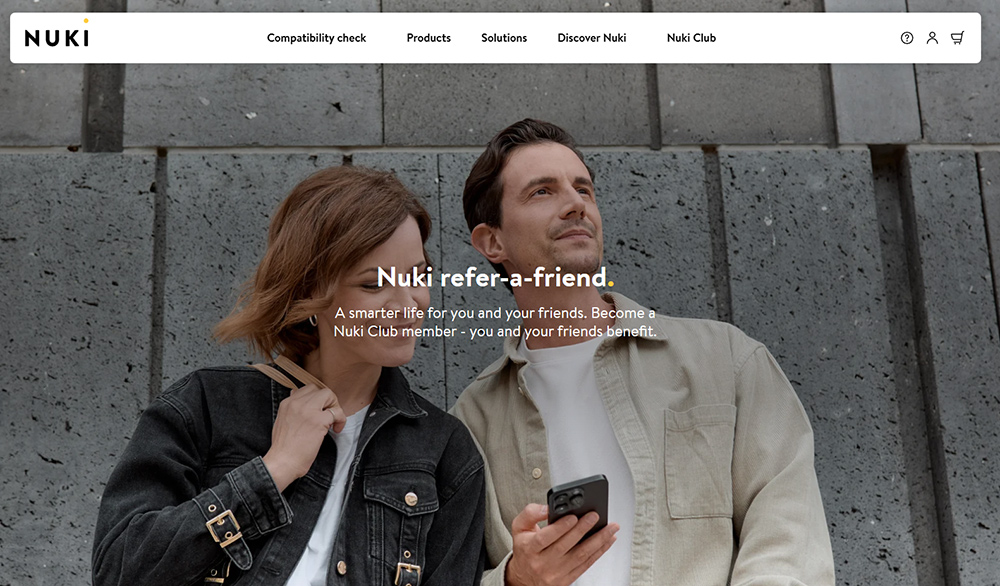
Nuki is an Austrian brand that makes smart locks. Its referral program targets existing customers who already love its products and want extra “perks” for staying engaged.
- Program Type: Milestone-based referral
- Incentives: Hardware rewards and voucher discounts
- Who Gets Rewarded: Referrer and referee
- Where It’s Promoted: Nuki Club account dashboard and email
Results / Impact: When Nuki revamped their club, it created reward tiers at 1, 3, 5, and 10 referrals. Plus, it added fun extras like birthday discounts for members. This newly introduced strategy keeps its members excited about bringing in more referrals.
Key Takeaway:
If you do it right, a milestone-based reward is a great way to keep getting new referrals from the same customers.
2. Natural Life
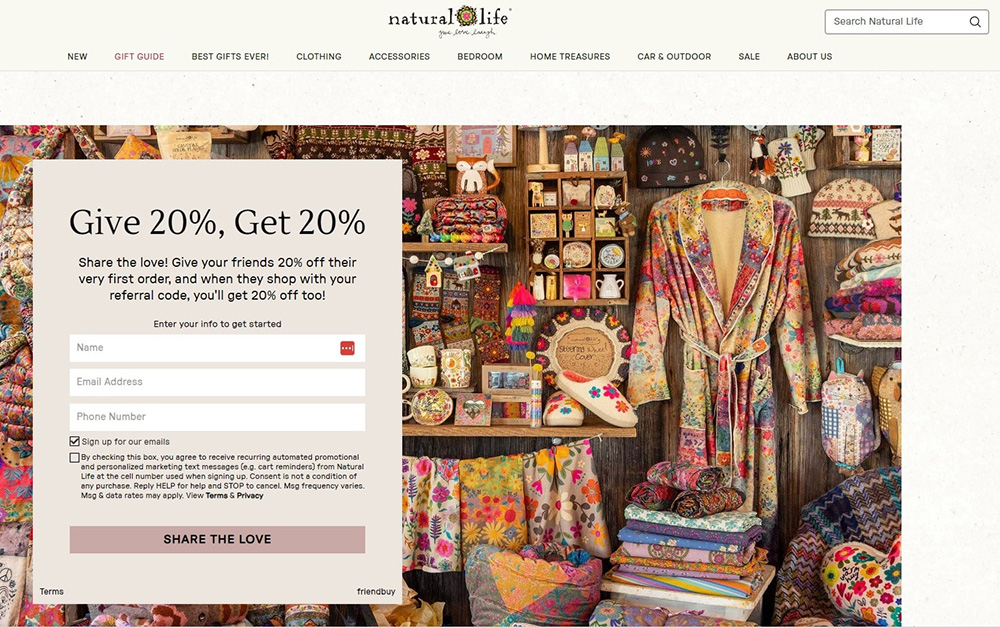
Natural Life is a US women’s lifestyle brand that sells colorful bohemian clothes, gifts, and home decor. Its audience is community-driven shoppers who value style, positivity, and personal expression.
- Program Type: Double-sided referral program
- Incentives: 20% off for both referrer and friend
- Who Gets Rewarded: Referrer and referred customer
- Where It’s Promoted: Website banners, landing pages, widgets, header, and footer placements
Results / Impact: Natural Life could get 35% of its customers to join the referral program. Referred customers also spent more money ($129 compared to $108 from regular buyers). Plus, it saw an 84x ROI and the numbers continued to increase… even with less ad spending.
Key Takeaway: Creating easy-to-understand rewards and making them visible in multiple places on your website really helps get customers sharing.
3. Grundig E-bike
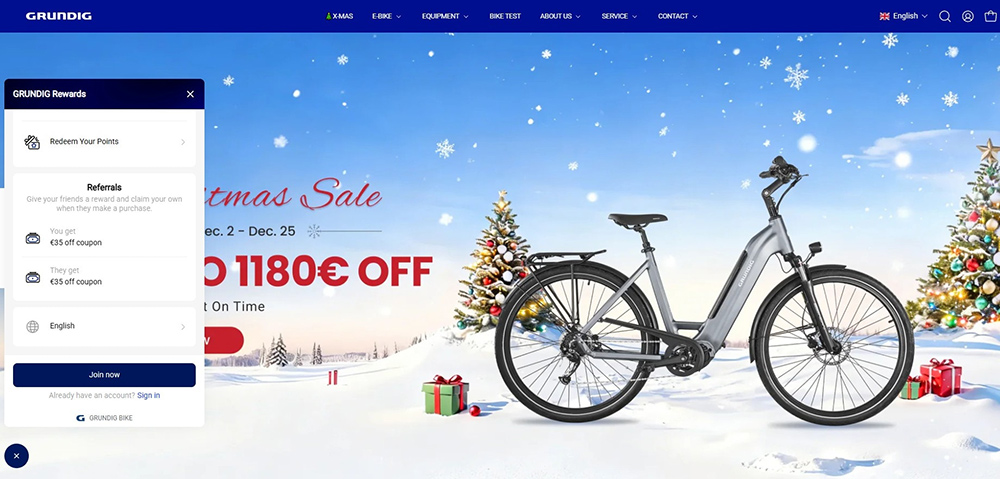
Grundig E-bike is the electric bicycle sub-brand launched in 2023 by German electronics company Grundig. It targets riders looking for high-quality, feature-rich e-bikes in a competitive European market where brand trust and education matter.
- Program Type: Double-sided referral
- Incentives: €35 off for both referrer and friend
- Who Gets Rewarded: Referrer and the new customer
- Where It’s Promoted: Loyalty page, social sharing prompts, and referral offer pages
Results / Impact:
The referral program delivered a 30% conversion rate, reduced customer acquisition costs by 50%, and drove an 85% increase in customer lifetime value.
Key Takeaway:
Gamified rewards plus strong referral incentives can cut acquisition costs and lift long-term value.
4. Harry’s
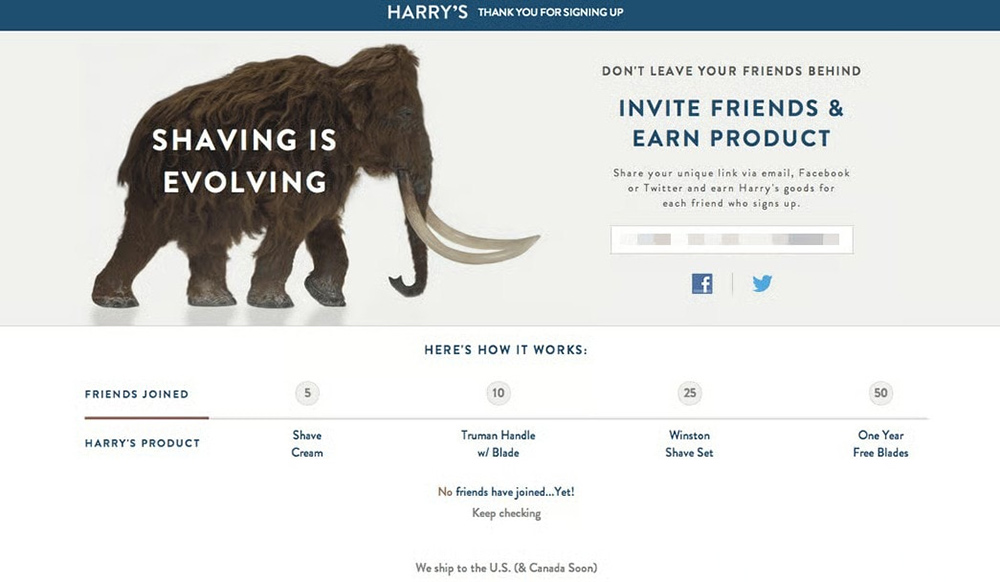
Harry’s is a razor brand founded by Jeff and Andy. It created simple, high-quality shaving products at fair prices, targeting men who wanted effective grooming without the premium markup.
- Program Type: Tiered milestone referral program
- Incentives: Free products at each tier: from shave cream (5 referrals) to a full year of blades (50 referrals)
- Who Gets Rewarded: Referrers only (one-sided program)
- Where It’s Promoted: Employee networks, personalized emails, and dedicated referral microsite
Results / Impact: Harry’s collected 100,000 emails in one week, with 77% coming from referrals. Over 20,000 people sent 65,000 referrals, and 200 reached the 50+ referral tier. The program also created a massive pre-launch buzz through organic efforts.
Key Takeaway: Starting referrals with your closest network (employees, friends) and using tiered rewards can create viral growth even before product launch.
5. Glossier
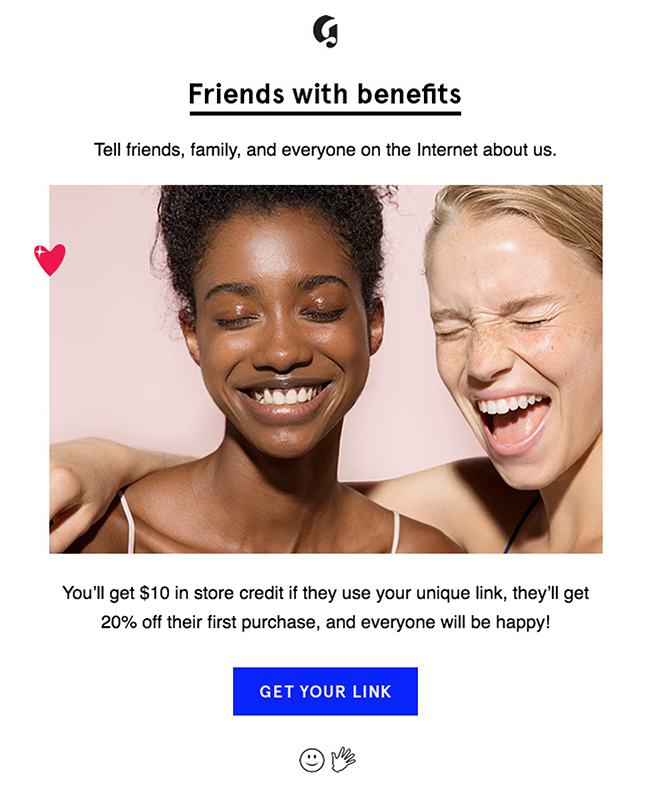
Glossier is a beauty brand that became popular with young women by focusing on simple, everyday products. The brand has since moved away from its original peer-to-peer referral program and now works with select affiliates instead. But we still included it here because it was a great example of a successful referral program.
- Program Type: Peer-to-peer referral program
- Incentives: $10 store credit for referrers, 20% off first purchase for new customers
- Who Gets Rewarded: Both referrer and new customer
- Where It’s Promoted: Social media, email campaigns, and website
Results / Impact: 70% of Glossier’s online sales and traffic came from peer referrals, with nearly 80% of customers coming through friend recommendations.
Key Takeaway: Building a community-first brand can turn customers into natural advocates.
6. Casper
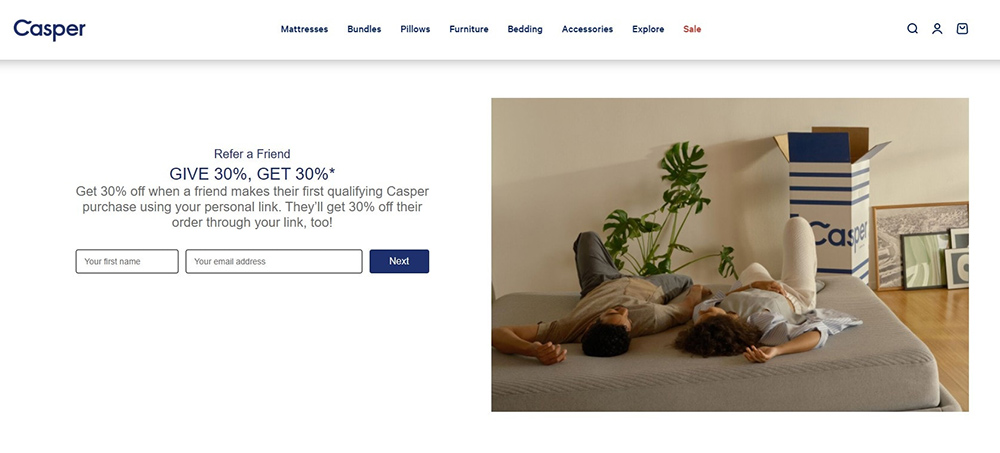
Casper is a mattress company that changed how people buy beds by offering online ordering with a sleep trial period. Since mattresses are high-ticket purchases that people research carefully, word-of-mouth recommendations carry extra weight in this market.
- Program Type: Two-sided incentive program
- Incentives: $75 Amazon gift card for referrers, 30% off for new customers
- Who Gets Rewarded: Both referrer and new customer
- Where It’s Promoted: Dedicated referral landing page, email campaigns, and post-purchase follow-ups
Results / Impact: Casper’s referral program generates 7x higher returns than its average marketing channels, with a 13% increase in referral conversion rates through A/B testing. The program works well because customers genuinely want to help friends and family get better sleep.
Key Takeaway: High-value products with long purchase cycles benefit from generous two-sided rewards.
Conclusion: Mastering the Customer Referral Strategy
That’s it for this article! You got everything you need to know to get started and plan your referral program with confidence. Let’s recap the following steps so you won’t forget:
- Set simple goals first, so you know what success looks like
- Pick rewards that work for your margins and feel exciting enough for your customers to share
- Use a referral tool that handles tracking for you
- Start with your happiest customers since they’re the most likely to send quality referrals
- Review your data and customer feedback often so you can fix small issues before they affect results
If you want an easy way to launch your own referral program, check out Trustoo Loyalty. It has the tools you need to set rewards, track performance, and motivate customers to share your store with the people they trust.
Book a demo today to see how Trustoo Loyalty can work for you.

Content Director | 9+ years decoding B2C & B2B eCommerce, obsessed with SaaS and retail storytelling
Words are my weapon—crafting killer copy, decoding trends, and turning data into gold. When not strategizing: Coffee addict, pun enthusiast, and book lover. Ready to level up your eCommerce game? Let’s chat. ☕️